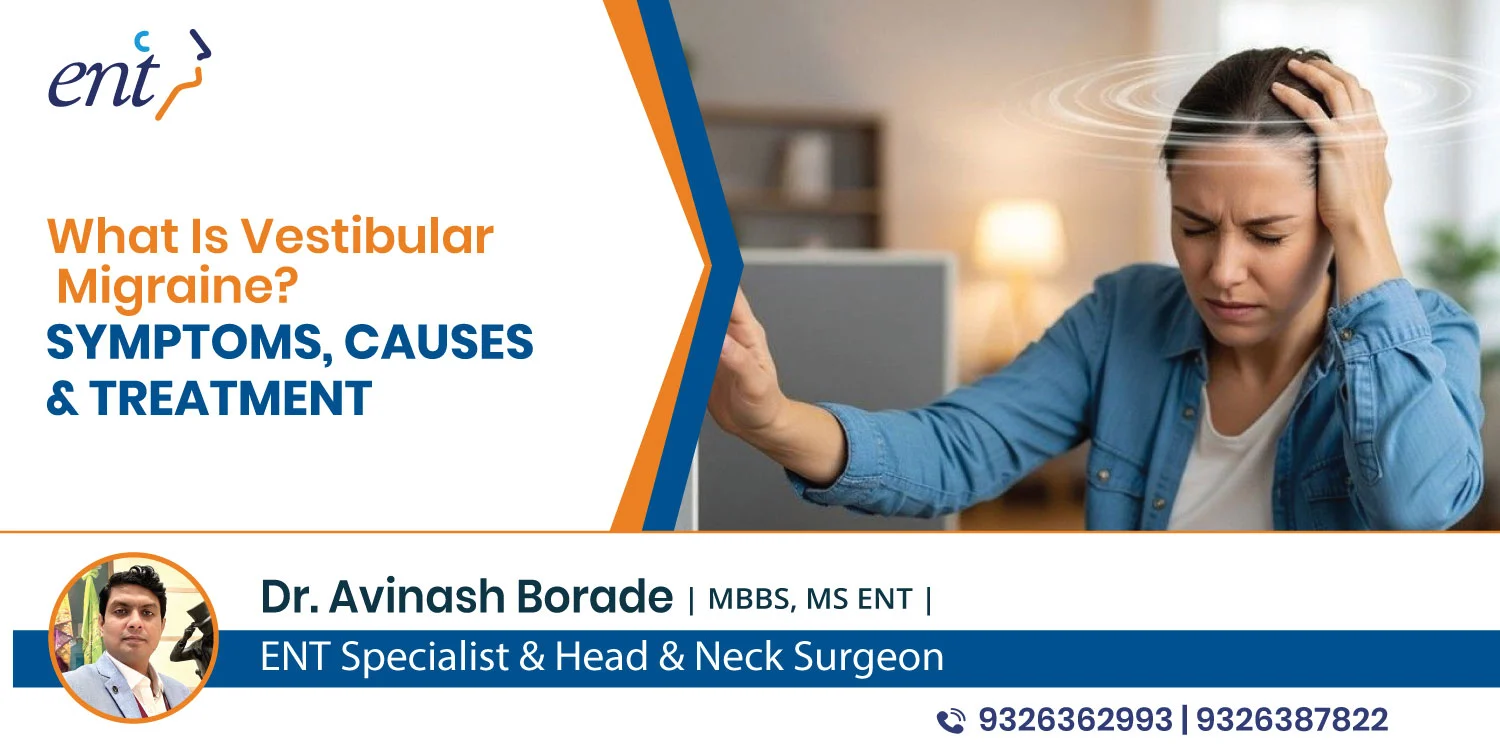
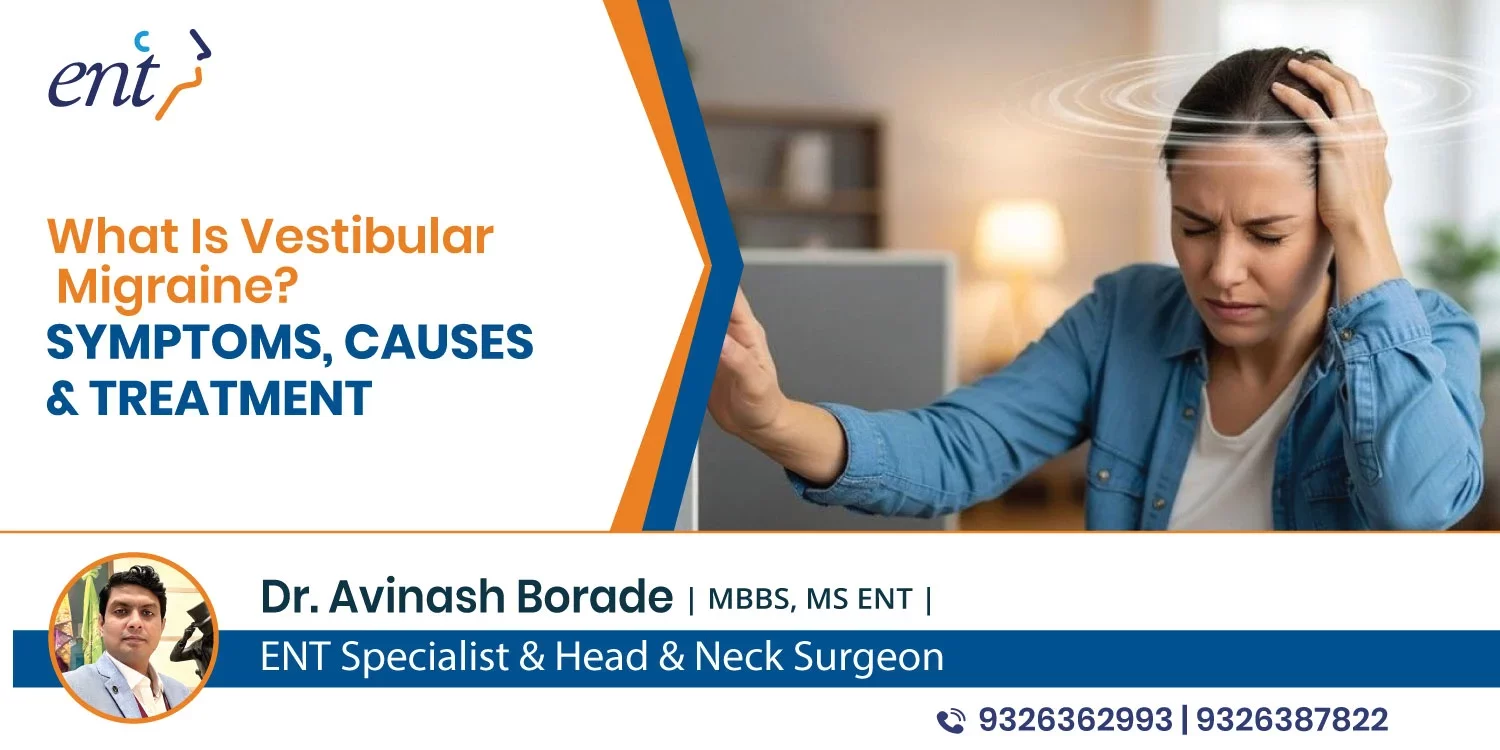
Vestibular migraine causes vertigo, balance issues, nausea, and lightheadedness, with or without headaches. Treatment includes medicines to manage symptoms during an attack or preventive treatment that reduces the frequency, intensity, and impact of migraine.
The throbbing headache on one side, sensitivity to light and sound, and vomiting are all signs of a migraine. Unlike typical migraine, vestibular migraine is a neurological condition that causes dizziness, vertigo, and balance problems, with or without a headache.
The symptoms can be so severe that some people describe it as feeling like the room is spinning or the floor is moving, or they can’t maintain their balance when standing. Although it can’t be cured, vestibular migraine can be managed. An ENT specialist in Navi Mumbai may recommend lifestyle changes and medication to help relieve your symptoms.
Vestibular Migraine Symptoms
Symptoms of vestibular migraine may vary from patient to patient. Vertigo is commonly seen as the most classic sign of VM. Other common signs include:
- Dizziness
- Difficulty keeping balance
- Nausea and vomiting
- Lightheadedness
- Sensitivity to light and sound
Headaches may or may not occur, but if you experience headaches, they are usually on one side and get worse with physical activity.
Some people also experience an aura, i.e., a range of visual symptoms occurring before or during the migraine attack. This includes flashing lights, blind spots, or zigzag lines.
Vestibular Migraine Causes
Research shows that 7% to 16% of patients are diagnosed with vestibular migraine in neurology clinics. The exact cause isn’t known yet, but experts believe many factors can contribute.
Childhood migraines, changes in weather, or genetics (having a close relative in your family with a migraine) can all play a role. Changes in the parts of your brain responsible for balance and pain can cause vestibular migraines.
Common Vestibular Migraine Triggers
Triggers can also vary between people. What may trigger an attack in some might not be a problem for others. Common triggers include sleeping longer or less than usual, disturbed sleep patterns, skipping meals, dehydration, prolonged exposure to the sun, certain smells, busy environments, and too much screen time.
For some, movements can trigger a VM attack. For example, an amusement ride, being on a boat, traveling by car, or moving your head can trigger or worsen an attack.
Vestibular Migraine Treatment
Treatment can be preventive for people with repeated VM attacks, or it may involve managing the symptoms when an attack occurs. Keeping a diary of triggers and avoiding them can also help reduce the frequency of attacks.
Medication
An ENT doctor may advise migraine-specific medicines, such as triptans, to manage migraine symptoms. Your doctor may also recommend antiseizure medications and antidepressants. Treatment mainly involves managing your symptoms.
For example, vertigo treatment in Navi Mumbai can be effective for those experiencing lightheadedness, dizziness, and balance issues. It’s also important that you take medicines immediately, as taking them later during an attack might not control the severe pain.
Preventive Treatment
If you have been getting frequent vestibular migraine attacks or symptoms start interfering with your regular life, preventive treatment may be necessary. This may include antidepressants, certain blood-pressure medicines, and other migraine-preventive drugs to reduce the frequency, severity, and impact of migraine.