When breathing through the nose becomes a constant struggle, people often turn to an ENT specialist in Navi Mumbai for treatment. Nasal sprays, antihistamines, and decongestants can help relieve a blocked nose.
However, if you find yourself snoring all night, breathing through your mouth, or having persistent nasal congestion, it could be a deviated septum.
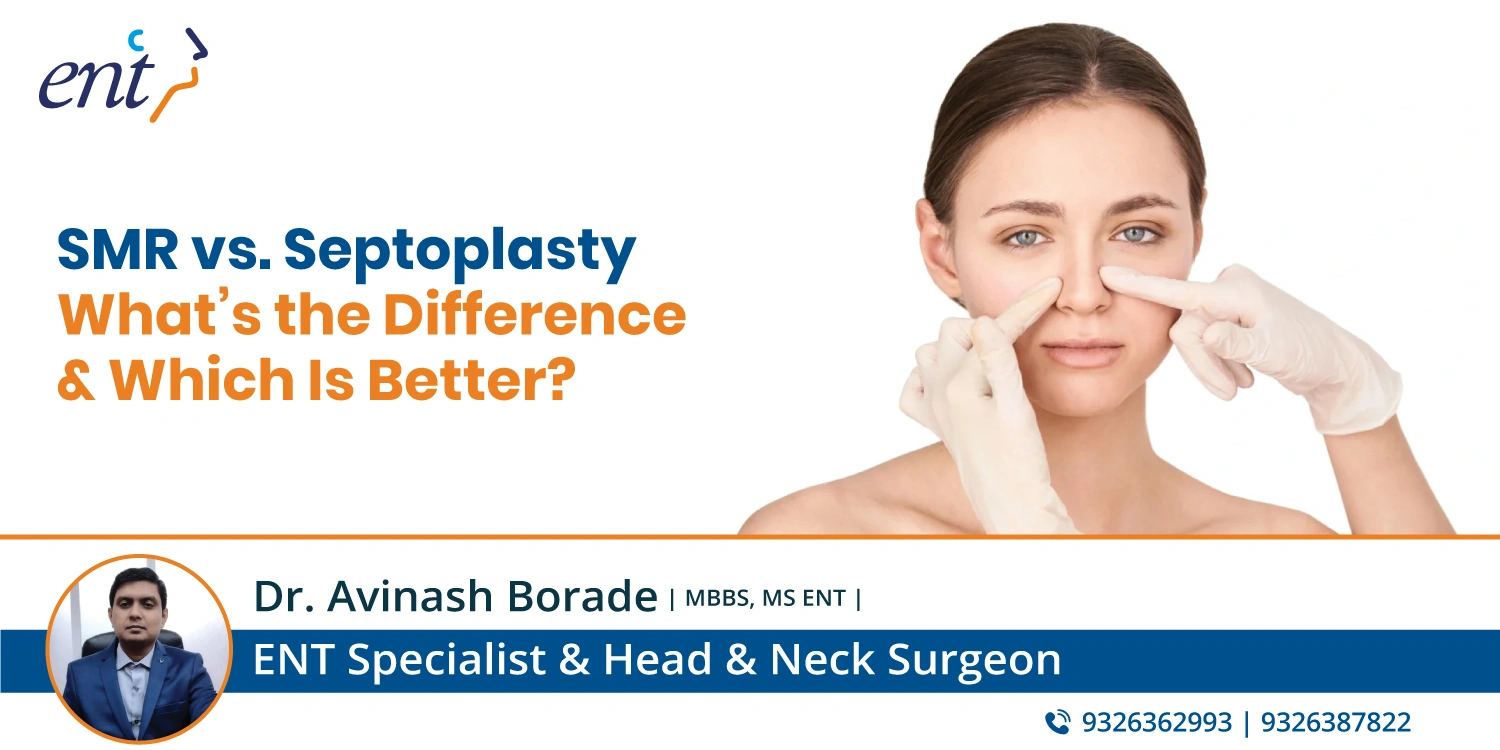
When medications stop working, doctors recommend surgical treatment to provide long-term relief. The two procedures widely performed are Submucous Resection and Septoplasty. Both correct the deviated septum, but use different techniques.
Deviated Septum: When Does it Require Surgery?
The septum is a thin wall made of bone and cartilage, sitting right in the center of the nose. It divides your nose into two nasal passages, so you can breathe through both sides effortlessly. A deviated septum occurs when this wall bends to one side or is displaced.
Some are born with a deviated septum, while others may develop it after an accident or an injury involving the nose. Mild issues do not cause noticeable symptoms, but severe deviations can cause problems, such as:
- Persistent nasal blockage
- Snoring
- Difficulty sleeping
- Facial pressure
- Frequent sinus infections
- Mouth breathing
- Headaches
Surgery is recommended when you have persistent symptoms affecting your sleep, work, and social life.
Understanding Submucous Resection
SMR is a conventional surgery for a deviated septum. The surgery removes crooked bone and cartilage to create enough space for your nasal passage, allowing easy breathing through both sides.
The septum lining remains intact. Only the deviated part is excised. Submucous Resection is performed to improve airflow through both nostrils.
The surgery has been used for decades as the standard surgical treatment for severe deviation. But because it removes a significant part of your nasal bone and cartilage, it’s less common in modern surgery.
Understanding Septoplasty
Septoplasty surgery in Navi Mumbai has become the most commonly recommended treatment option for a deviated septum. It’s known for its conservative approach that focuses on reshaping the septum rather than removing a large portion of the bent tissue.
The goal is not to remove excessive nasal tissue, but subtly reposition the septum by lifting the mucosa, ensuring maximum natural tissues are preserved. Today, most clinics favor septoplasty, as it’s more precise, relatively less invasive than SMR, offers faster recovery, and protects the supportive structure of your nose.
Which Surgery is Better?
Septoplasty is more common today. The gentler approach and fewer risks of complications make it an effective option for a deviated septum.
Many people believe that a more aggressive surgical approach will result in improved breathing and better overall results, but that’s not true. With nasal surgeries, preserving nasal function is better in the long run.
Septoplasty is an ideal treatment because it is associated with reduced risks of complications, such as septal perforation or nasal collapse.