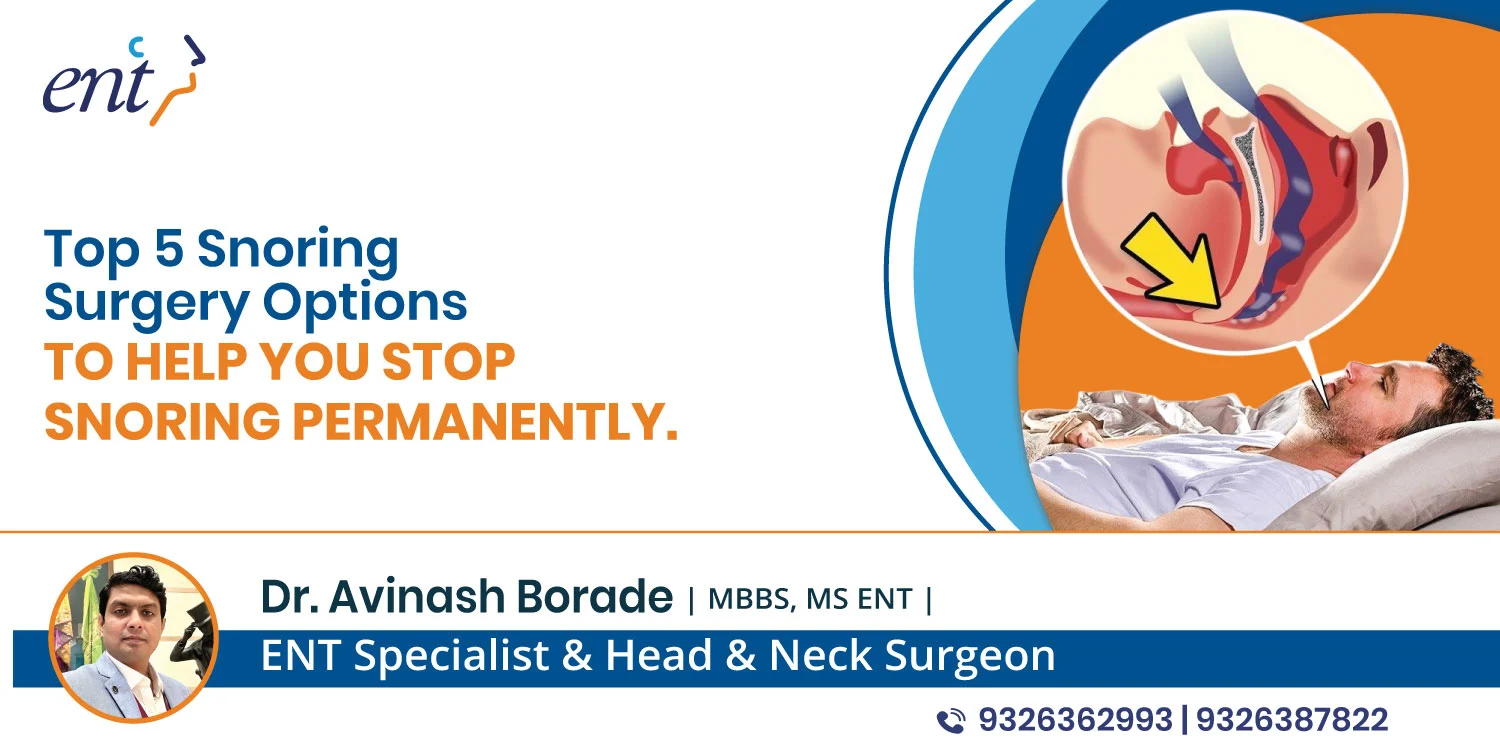
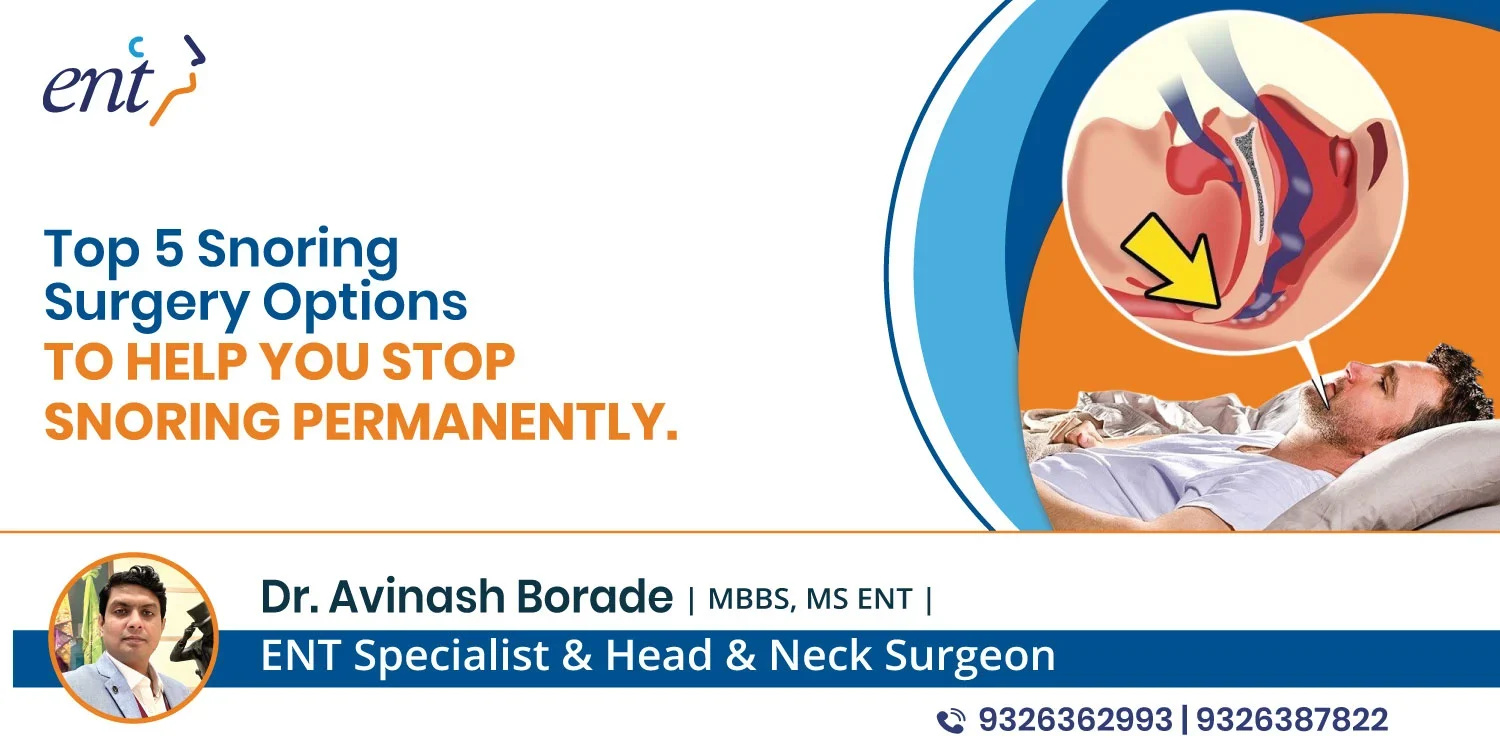
For most people, snoring is just an annoying nighttime habit. When you are asleep, your throat tissues relax and may produce a vibration, leading to the noise. Surgery isn’t the first-line snoring treatment in Navi Mumbai, but it may be an effective decision if there’s an anatomical issue that blocks your airway or causes repeated, loud snoring during sleep.
Best Snoring Surgery Options
Most causes of frequent snoring are harmless. However, it’s also linked to sleep apnea — a condition where you have breathing pauses during sleep. If that’s suspected, your doctor may conduct a sleep study before considering surgery. Here are some top surgical procedures that can help eliminate snoring.
1. Septoplasty
Snoring can also indicate a deviated septum—a condition in which the bone and cartilage that divide your nostrils are displaced, crooked, or off-center. This can make one nasal passage narrower, which, in turn, obstructs airflow through one nostril.
The result is difficulty breathing through the nose during sleep and loud snoring. Septoplasty is a nasal surgery that improves airflow through both nostrils and help reduce snoring by straightening the deviated nasal wall.
2. Uvulopalatopharyngoplasty (UPPP)
Uvulopalatopharyngoplasty (UPPP) is for people with sleep apnea or enlarged throat tissues that block the airway during sleep. The surgery removes excessive tissue from the soft palate, uvula, and tonsils.
This expands the airway, allowing air to flow freely through the back of your tongue and thus reducing snoring sounds during sleep. Many patients who have undergone UPPP surgery report improved breathing, reduced snoring, and overall improved quality of sleep.
3. Maxillomandibular Advancement (MMA)
Maxillomandibular Advancement isn’t used as a primary treatment for snoring, but if an ENT specialist in Navi Mumbai suspects moderate to severe obstructive sleep apnea (OSA), they may consider this option.
It’s mainly recommended if your snoring is linked to a narrowed airway due to the jaw structure. The surgery repositions the jaw by moving both the upper and lower jaws forward, thus creating more space behind the tongue. This improves airflow during sleep.
4. Inspire Hypoglossal Nerve Stimulation
This is a surgical alternative to CPAP therapy and is widely recommended for patients with obstructive sleep apnea. It involves placing a small device under your skin, which helps detect breathing and sends signals to move your tongue slightly forward with each breath. This helps improve breathing during sleep, thus reducing snoring.
5. Tonsillectomy
Tonsillectomy is another surgery that can help reduce or even eliminate snoring in children and adults. Large tonsils can narrow airways, causing snoring when you sleep. This surgery removes enlarged tonsils, thus widening your airways and improving breathing.
Note that the success of tonsillectomy in reducing snoring depends heavily on whether enlarged tonsils are the primary cause of snoring. It may also benefit those with recurrent tonsil infections.
Occasional snoring due to nasal congestion or certain sleeping positions is usually not concerning, but long-term snoring that doesn’t improve with anti-snoring devices or lifestyle changes may require a surgical intervention.