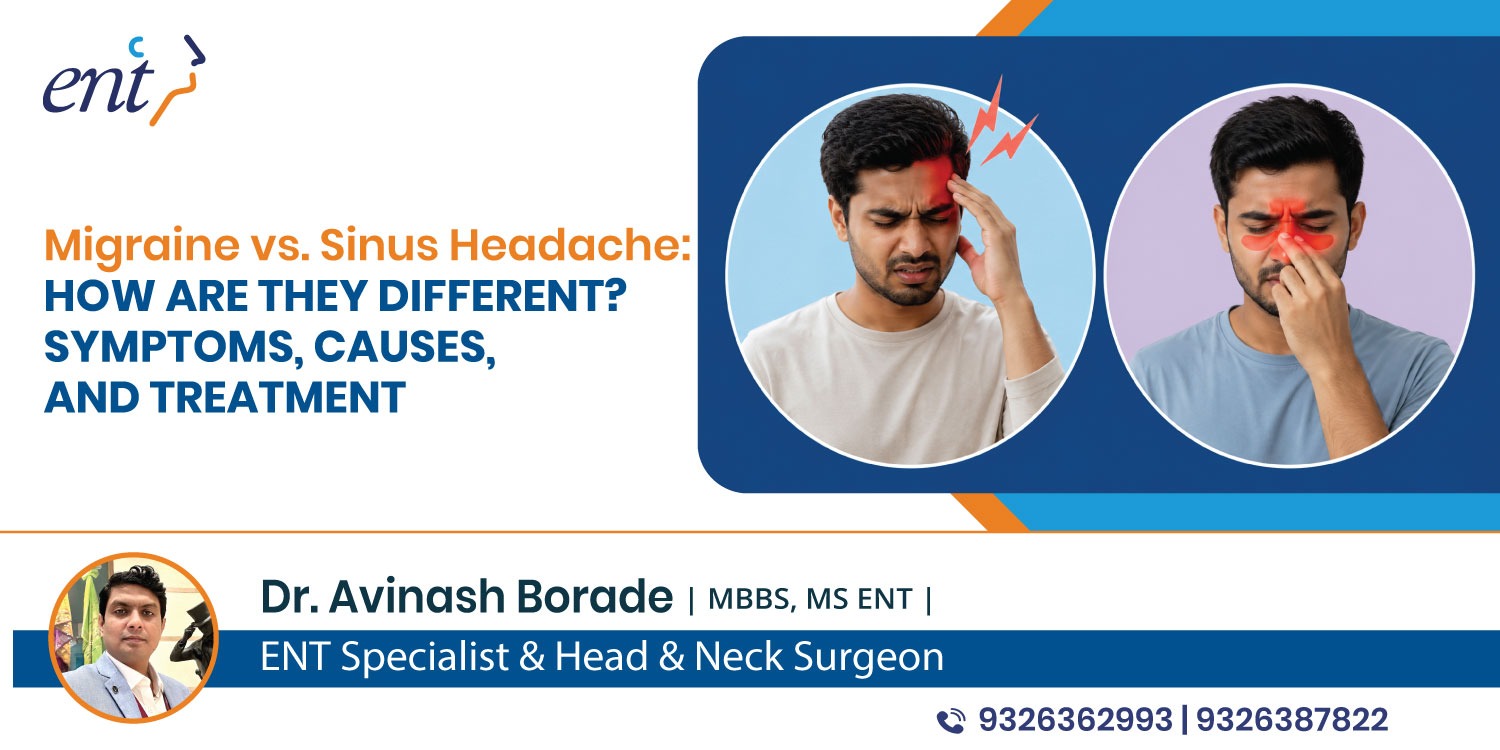
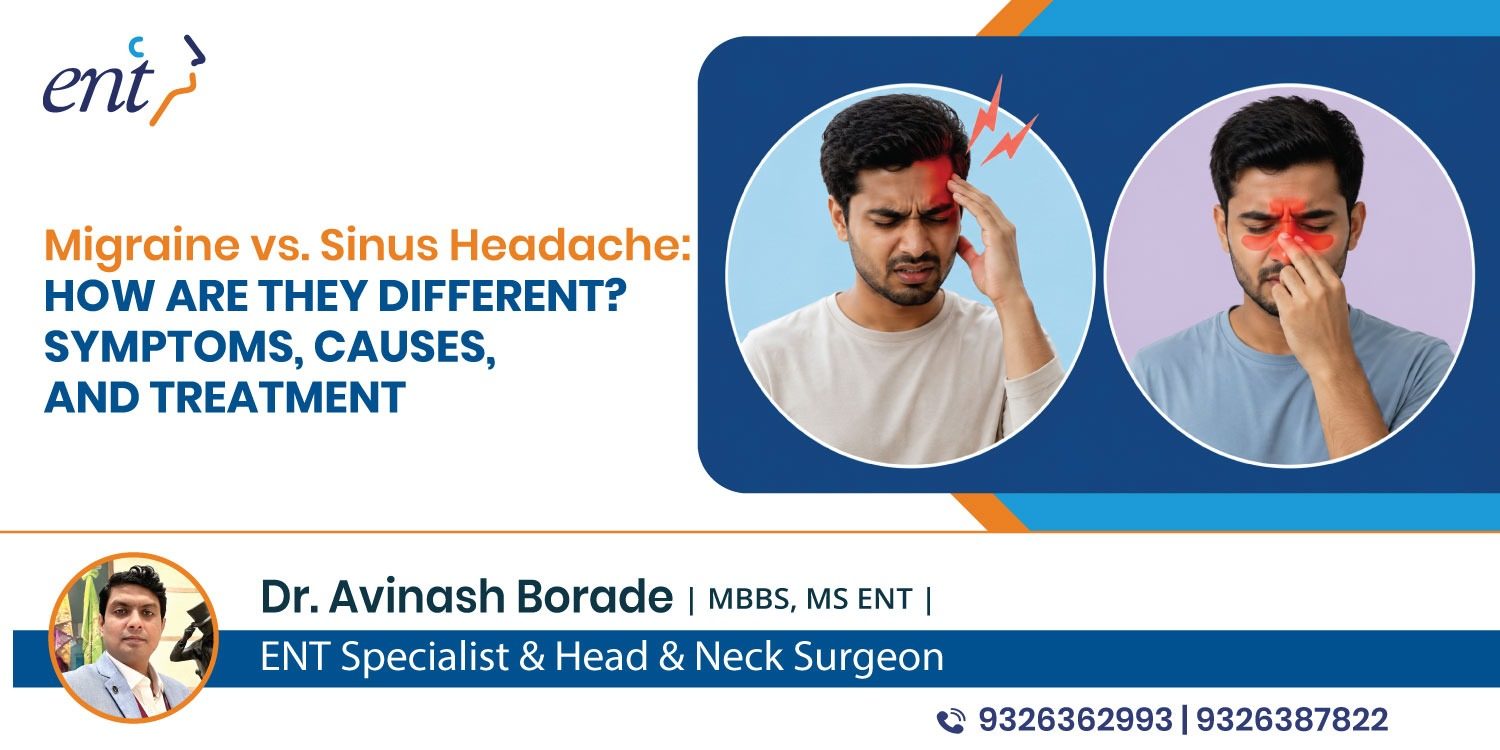
Headaches, runny nose, and facial pressure may all seem like common signs of sinus headaches, but is it really your sinus acting up or something else? Migraine attacks also present with the same symptoms, often making the two conditions difficult to distinguish.
It’s important to understand the difference because sinus treatment in Navi Mumbai involves steam inhalation, nasal rinses, and decongestants, which may not work well for migraine attacks.
What is a Migraine?
A migraine attack is a neurological issue causing intense, throbbing pain, typically on one side of the head, although it can affect both sides. Many people experience aura before the attack begins. This can cause a range of visual symptoms, such as blind spots, zigzag patterns, or speech changes.
What is a Sinus Headache?
A sinus headache feels more like pressure around the forehead, cheeks, and nose, and usually occurs with other sinusitis symptoms. It occurs when the tissue lining your sinuses becomes irritated and inflamed, which can block mucus drainage. Symptoms develop when you catch a common cold.
Sinus Headaches Vs Migraine: Symptoms
What makes both confusing is the fact that the pain gets worse when bending forward and occurs with facial pressure. These symptoms may help distinguish the two.
Migraine
- Nausea or vomiting
- Sensitivity to sound and light
- Difficulty concentrating
- Pain getting worse with physical activity, such as bending, climbing stairs, lifting things, or walking
The symptoms resemble sinus headaches when the autonomic nervous system is involved.
Sinus Headaches
- Blocked nose
- Facial pressure
- Thick nasal discharge
- Reduced sense of smell
- Cough
- Fever
Sinus Headaches Vs Migraine: Causes
Migraine
Migraines occur because of unusual activity in the brain that affects the blood vessels and nerve signals. It has different triggers, such as stress, disrupted sleep, certain smells, skipped meals, and hormonal changes. Sometimes, changes in routine can trigger a migraine. Some people follow the same routine every day and still develop a migraine attack without an obvious trigger.
Sinus Headaches
Sinusitis is linked to inflammation in the sinuses (the hollow spaces that produce mucus). Blockage in these spaces can prevent drainage, thus accumulating mucus in the sinuses and causing nasal congestion and a stuffy nose. The infection is usually caused by a virus, but some people develop a secondary bacterial infection later.
Sinus Headaches Vs Migraine: Treatment
Migraine
Mild migraine headaches can be relieved with over-the-counter painkillers, such as ibuprofen or naproxen. However, if you have severe headaches that occur frequently, affecting your quality of life, a preventive treatment may be necessary.
You may need medicines that prevent the frequency and severity of attacks rather than relieving the pain when an attack is triggered. Changes in your daily habits, such as regulating your sleep cycles and meals, managing stress, and avoiding personal triggers, can all contribute to reduced migraine frequency.
Sinus Headaches
You can see an ear doctor in Navi Mumbai if you have chronic sinusitis. Rest, hydration, nasal corticosteroid sprays, and rinses may be enough to relieve your symptoms. Decongestants can also provide relief from nasal congestion.