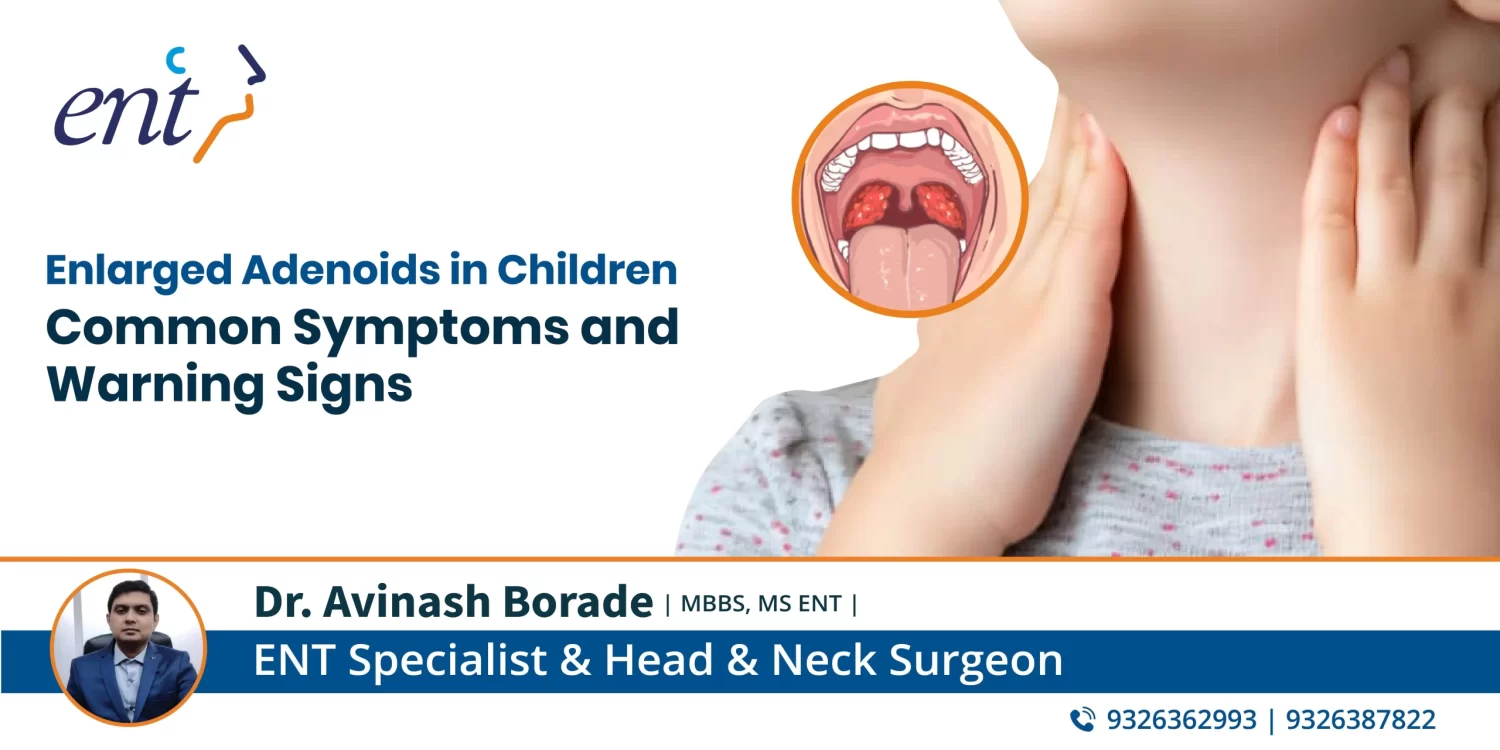
Does your child get cold often? Do they breathe through their mouths mostly? Or, do they snore loudly? The culprit could be enlarged adenoids. They can become irritated and inflamed, causing swelling. Enlarged adenoids can block your child’s nasal passage, which can lead to all the symptoms mentioned above. You might want to know what adenoid treatment in Navi Mumbai your child needs. Let’s start by understanding adenoids.
What are Adenoids?
Located at the back of the nasal cavity, adenoids in children act as germ-fighters. They are located high in the child’s throat, making them hard to see. They are super active in their early childhood and help trap many germs that enter the child’s nose and mouth. These tissues, however, shrink automatically when your child grows and almost disappear by the time they reach adolescence.
What Causes Enlarged Adenoids?
Adenoids enlarge when they are fighting infections, such as viral, bacterial, or even allergies. The swelling might linger, even after the infection is cleared. Sometimes, it occurs due to repeated respiratory infections or constant exposure to pollutants and allergens.
Symptoms of Enlarged Adenoids
Although the swelling may not be visible due to its location, the symptoms are obvious. Adenoids affect airflow because they are behind your nose. Some common symptoms present in enlarged adenoids include:
- Breathing Through the Mouth: Does your child breathe constantly through the mouth, especially when asleep? This can indicate a blocked nose. A common cause is enlarged adenoids.
- Snoring: Snoring might be completely harmless in children, but if it’s loud, persistent, and is accompanied by mouth breathing and bad breath, enlarged adenoids can be the cause.
- Sleep Apnea: Some children with enlarged adenoids develop sleep apnea, a condition in which breathing pauses for a few seconds during sleep.
- Stuffy Nose: Since adenoids block the airflow through the nose, a persistent stuffy nose can be another symptom.
- Changes in their Voice: If your child always speaks like their nose is pinched, or you notice a stuffy voice, that could be a sign of enlarged adenoids.
- Frequent Ear Infections: Adenoids are located close to the eustachian tubes, which connect your middle ear to the throat. If the adenoids are enlarged, the eustachian tubes can get blocked, causing ear infections and hearing problems.
When to See a Healthcare Provider
Enlarged adenoids are common after infections. However, if they persist or cause the following symptoms, it’s best to get expert advice.
- Has breathing pauses at night
- Experiences frequent ear infections or hearing issues
- Can’t breathe comfortably through the nose even during the daytime
- Can’t concentrate properly due to poor sleep
- Has difficulty swallowing or eating
An ENT specialist in Navi Mumbai will ask about the child’s sleep patterns, breathing, voice, and whether they catch colds frequently. They will check the throat, nose, and ears. If enlarged adenoids are suspected, they might order an X-ray or nasal endoscopy for a clear view. In some cases, if the enlarged adenoids persist and cause regular discomfort or affect the child’s quality of life, they may recommend a small outpatient procedure to remove them.