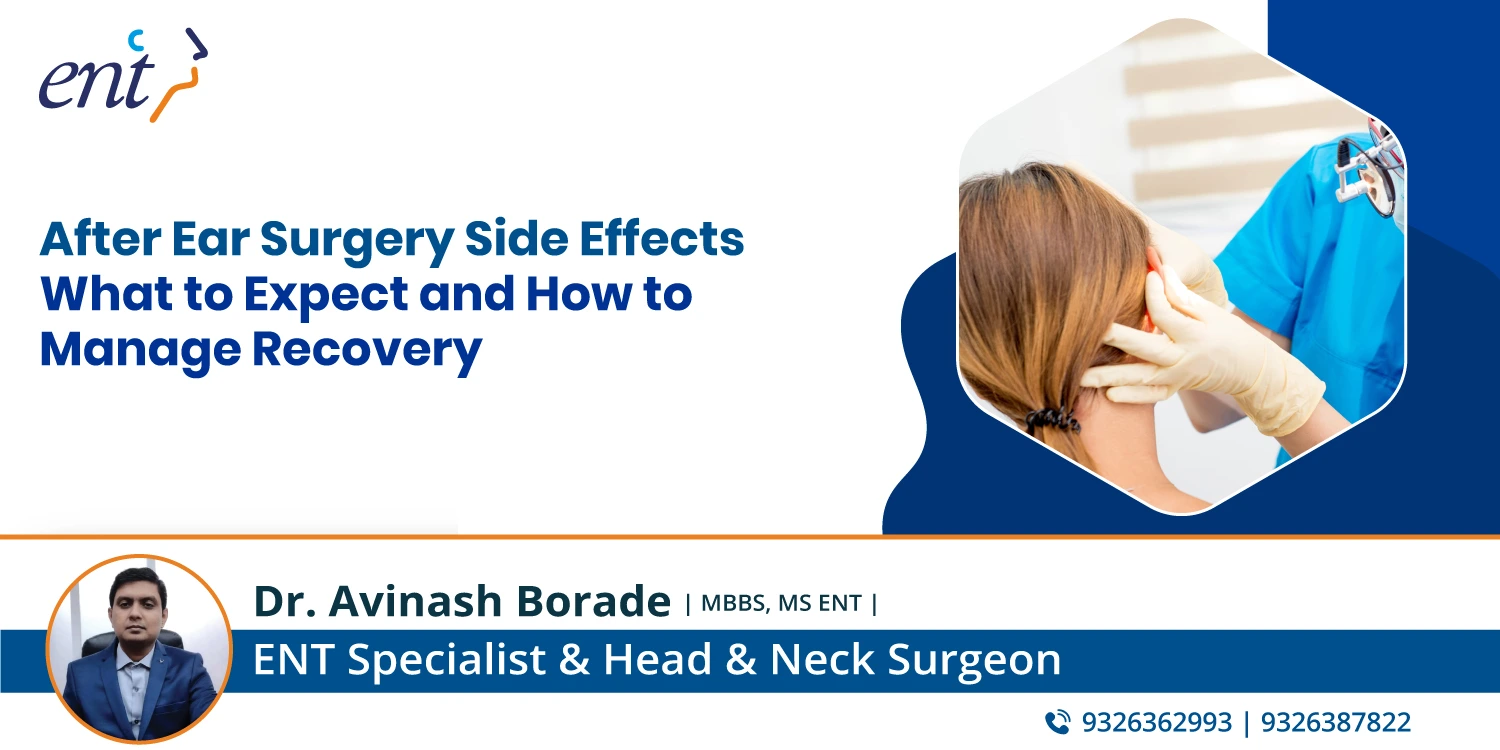
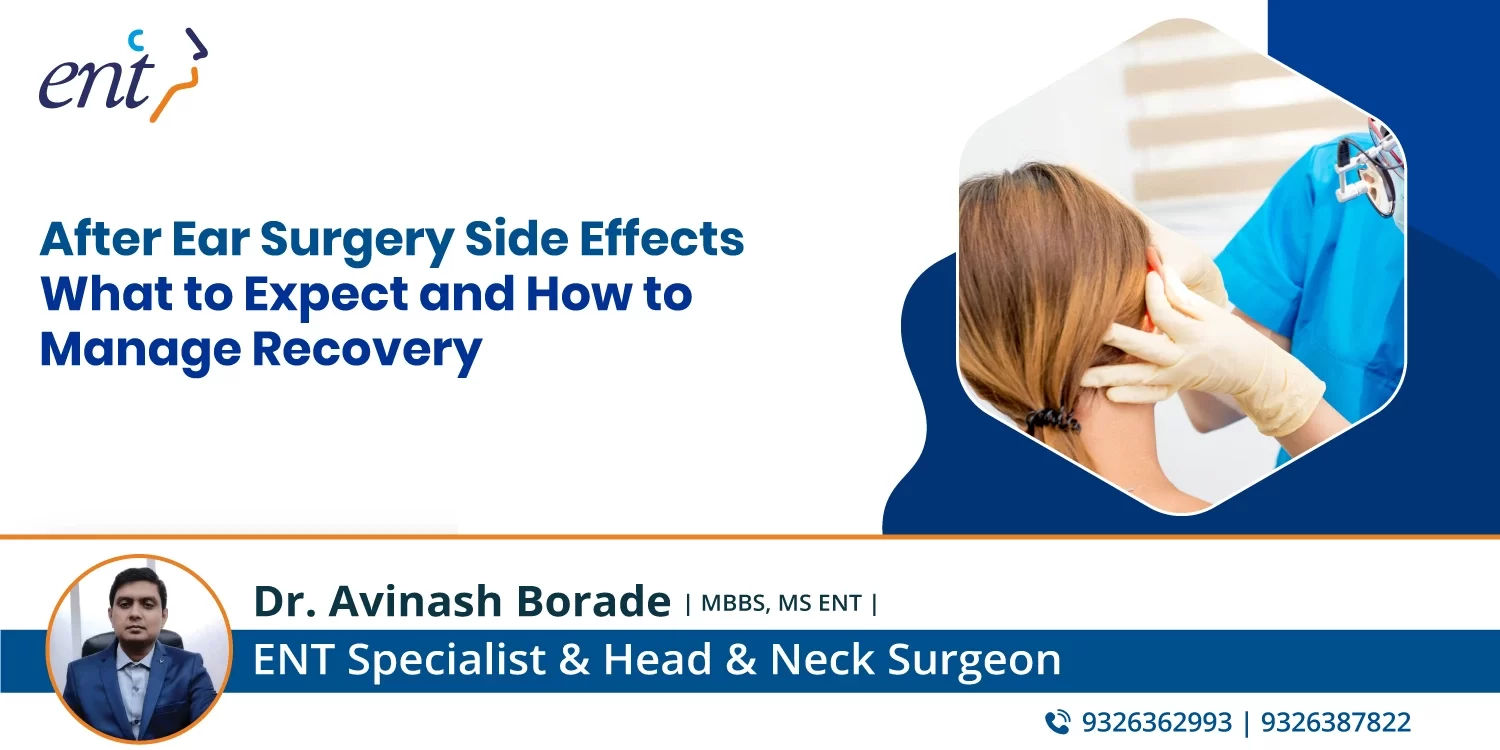
An ear surgery, whether it’s tympanoplasty, mastoidectomy, or a surgery for a cosmetic reason, is a major procedure performed by an ENT surgeon in Navi Mumbai. Although the surgery itself can help manage debilitating pain, hearing issues, infection, and other ear-related concerns, it comes with after-effects.
Your surgeon will explain post-surgical instructions to help you recover from surgery and get back to your normal life. If you are wondering what the initial weeks after ear surgery will look like, read on to know what to expect and how to speed up recovery after an ENT surgery.
What Happens After Ear Surgery
It’s not uncommon to have some pain, discomfort, tenderness, or mild swelling on the surgical site for a few days. These can be managed with prescription medication. Pain, particularly, can be quite uncomfortable in the first few days and is often felt around the surgical ear. It can also radiate down your face or neck.
Swelling may peak on the first 2-3 days after surgery, but should gradually go down. Other side effects include drainage (clear or bloody) from your dressing. However, if it appears to be pus or has a foul odor, report it to your surgeon immediately.
The surgery may also temporarily affect your hearing. Some patients report hearing a ringing sound, while others experience muffled hearing. That’s another common after-effect of the surgery and should improve with time.
At-Home Recovery Tips
When you leave the otorhinolaryngology (ENT) clinic in Navi Mumbai, you will get simple recovery tips that can help make your healing journey smoother, less painful, and more comfortable. Here’s what’s generally advised by ENT surgeons after ear surgery.
- Do Not Wash: No need to shower, swim, or expose the surgical ear to water unless the ear has healed or your surgeon says it’s safe to shower. Try to keep the area as dry and clean as possible to reduce the risk of infection.
- Do Not Wait for the Pain to Worsen: As mentioned above, pain and tenderness are quite common after ear surgery. Your doctor will explain the dosage for pain medicines. Taking them as advised by your doctor will help ease pain and make your recovery smoother. You may also need to take antibiotics to prevent infection.
- Rest: Some patients feel lightheaded or dizzy after ear surgery, as the ear plays an important role in balance. This must be resolved within a few days. Take 2-3 weeks off from work and rest as much as your body requires. Keep your head elevated when resting, and do not sleep on the operated ear for a few days.
- Don’t Overexert Yourself: Do not indulge in strenuous exercises or activities that could put excessive pressure on the healing tissue.
When to See Your Surgeon
Contact your ENT specialist if you develop:
- Extreme pain that does not respond to painkillers
- High-grade fever with chills
- Pus-like, foul-smelling discharge from the ear
- Severe dizziness with vomiting
It’s important to know the difference between normal and abnormal signs that occur after ear surgery and seek medical assistance when things seem unusual.